Crypto Coinosity

Cryptocurrency information

Category Archive : Learn Cryptocurrency

Unveiling the Main Purpose of Cryptocurrency: Revolutionizing the Financial Landscape

Cryptocurrency has emerged as a groundbreaking technology that seeks to transform the traditional financial system. Designed to operate on decentralized networks, cryptocurrencies offer unique features and functionalities that have the potential to disrupt traditional financial transactions. In this article, we will explore the main purpose of cryptocurrency and its impact on the financial landscape.

Decentralization and Financial Freedom
One of the primary purposes of cryptocurrency is to establish a decentralized financial system. Traditional financial systems rely on central authorities such as banks or governments to facilitate transactions and maintain records. Cryptocurrencies, on the other hand, operate on decentralized networks known as blockchains, where transactions are verified by a network of participants.

By removing the need for intermediaries, cryptocurrencies provide individuals with direct control over their financial transactions. This decentralization fosters financial freedom by eliminating the limitations imposed by traditional banking systems, such as geographical restrictions, long processing times, and high transaction fees.

Image by: Worldspectrum

Security and Privacy
Another vital purpose of cryptocurrencies is to enhance the security and privacy of financial transactions. Cryptocurrencies utilize advanced cryptographic techniques to secure transactions and protect users’ identities. Transactions recorded on a blockchain are immutable and tamper-proof, reducing the risk of fraud and unauthorized manipulation.

Cryptocurrencies also offer a certain level of anonymity and privacy. While transactions are recorded on the blockchain, users can maintain their privacy by using pseudonyms or wallet addresses instead of revealing personal information. This privacy feature has gained popularity among individuals who value their financial privacy and seek to maintain control over their personal data.

Facilitating Borderless Transactions
Cryptocurrencies aim to facilitate seamless and borderless transactions, transcending the limitations of traditional financial systems. With cryptocurrencies, individuals can send and receive funds globally without the need for traditional intermediaries or lengthy cross-border transaction processes. This feature has significant implications for international trade, remittances, and financial inclusion, particularly in regions with limited access to traditional banking services.

Cryptocurrencies enable individuals to bypass currency conversion fees and lengthy processing times associated with traditional international transactions. This has the potential to lower costs and increase efficiency in cross-border transactions, benefiting businesses and individuals alike.

Investment Opportunities and Financial Inclusion
Cryptocurrencies provide investment opportunities for individuals seeking to diversify their portfolios and participate in the growing digital economy. Unlike traditional financial markets, cryptocurrency markets operate 24/7, allowing individuals to trade and invest at any time. This accessibility and liquidity have attracted investors and traders, fostering a vibrant and dynamic market.

Furthermore, cryptocurrencies have the potential to foster financial inclusion by providing access to financial services for the unbanked or underbanked populations. With a smartphone and internet connectivity, individuals can create cryptocurrency wallets and participate in the global financial system, bypassing the need for traditional banking infrastructure.

Innovation and Technological Advancement
Cryptocurrencies serve as a catalyst for innovation and technological advancement. The underlying technology behind cryptocurrencies, blockchain, has far-reaching implications beyond financial transactions. Blockchain technology can be applied to various industries, including supply chain management, healthcare, voting systems, and more.

Cryptocurrencies fuel the development of decentralized applications (DApps) and smart contracts, which enable the creation of programmable and self-executing agreements. This opens up new possibilities for automation, transparency, and efficiency in various sectors.

The main purpose of cryptocurrency is to revolutionize the financial landscape by providing decentralized, secure, and borderless transactions. Cryptocurrencies enable individuals to have direct control over their financial transactions, enhancing financial freedom. They offer increased security and privacy, reducing the risk of fraud and protecting users’ identities.

Cryptocurrencies also facilitate borderless transactions, simplifying international trade and remittances. They provide investment opportunities and foster financial inclusion by allowing individuals to participate in the global financial system, regardless of their location or access to traditional banking services. Additionally, cryptocurrencies drive innovation and technological advancement, with blockchain technology opening up possibilities for various industries beyond finance.

It is important to note that while cryptocurrencies offer numerous benefits, they also come with certain risks and challenges. Volatility in cryptocurrency markets, regulatory uncertainties, and security vulnerabilities are factors that should be considered when engaging with cryptocurrencies.

As the cryptocurrency ecosystem continues to evolve, it is crucial for individuals to stay informed and educated about the technology, market trends, and potential risks. Proper research, understanding of investment strategies, and caution are essential when participating in the cryptocurrency space.

In conclusion, the main purpose of cryptocurrency is to reshape the financial landscape by offering decentralized, secure, and borderless transactions. From providing financial freedom and privacy to enabling investment opportunities and fostering financial inclusion, cryptocurrencies have the potential to revolutionize the way we engage with money and financial services. By embracing this transformative technology, individuals can empower themselves to take control of their finances and participate in the digital economy.


Exploring the Four Types of Cryptocurrency: A Comprehensive Guide

Cryptocurrency has revolutionized the financial landscape by introducing decentralized digital currencies that offer security, transparency, and efficiency. With the rapid growth of the cryptocurrency market, various types of cryptocurrencies have emerged, each with unique features and functionalities. In this article, we will delve into the four main types of cryptocurrencies and explore their characteristics, use cases, and potential impact on the financial industry.

Bitcoin and Digital Currency
Bitcoin, introduced in 2009, is the first and most well-known cryptocurrency. It operates on a decentralized network called blockchain, where transactions are verified by a network of computers (nodes) rather than a central authority. Bitcoin serves as a digital currency and a store of value. It enables peer-to-peer transactions without the need for intermediaries, such as banks, making it a borderless and censorship-resistant form of payment.

Bitcoin’s primary use case is as a medium of exchange and a store of value. Its finite supply of 21 million coins makes it resistant to inflation, and its decentralization provides security and transparency. Bitcoin has gained widespread adoption and is accepted by numerous merchants and online platforms.

Altcoins and Cryptocurrency Tokens
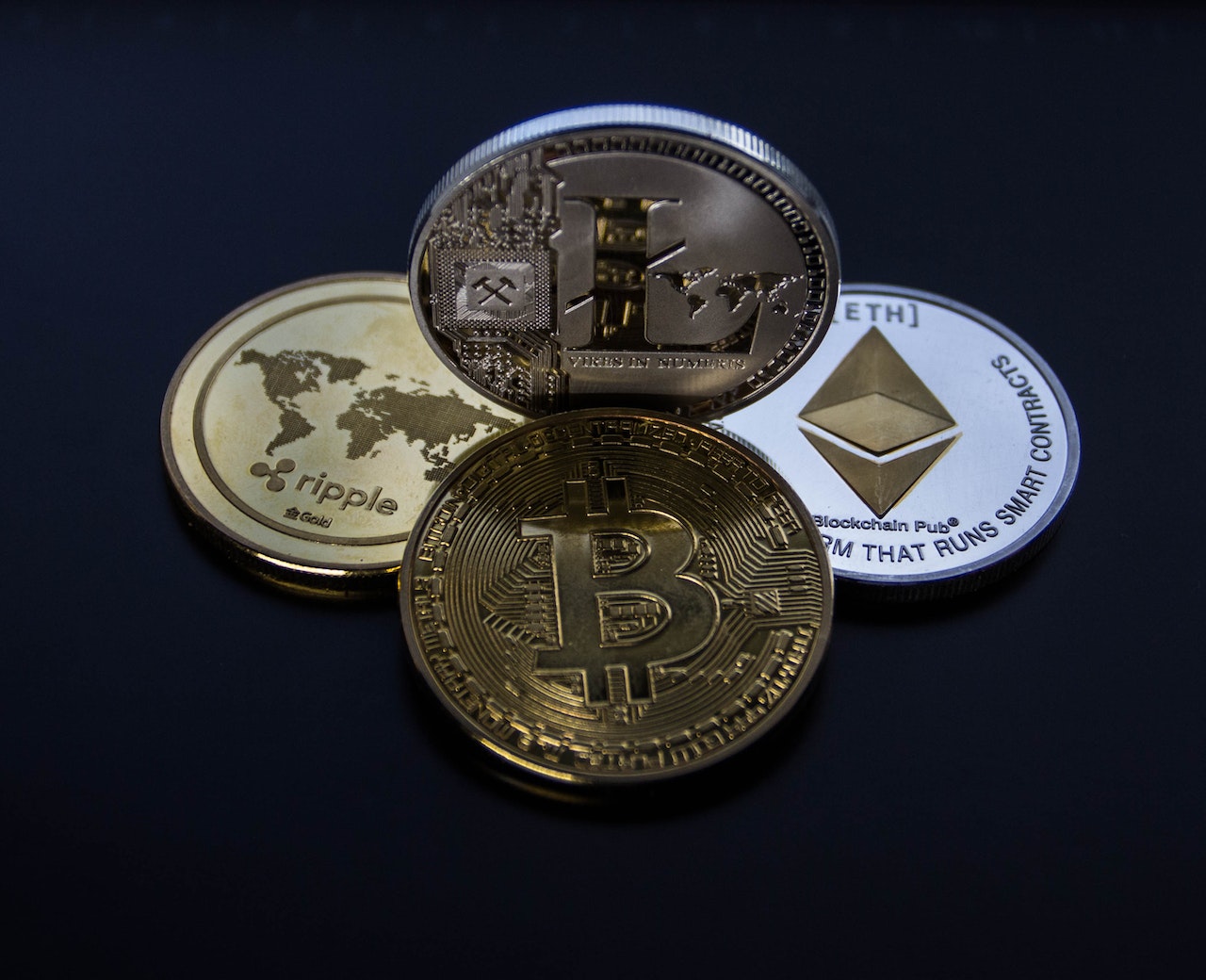
Altcoins, short for alternative coins, are cryptocurrencies other than Bitcoin. These digital currencies aim to improve upon the limitations of Bitcoin and offer additional functionalities. Altcoins include a diverse range of cryptocurrencies, such as Ethereum (ETH), Ripple (XRP), Litecoin (LTC), and many others.

Ethereum, the second-largest cryptocurrency by market capitalization, is notable for its smart contract functionality. It allows developers to create and deploy decentralized applications (DApps) on its blockchain. Ethereum’s native cryptocurrency, Ether, is used to fuel transactions and execute smart contracts within the Ethereum ecosystem.

Cryptocurrency tokens, on the other hand, are created and operate on existing blockchain platforms. Tokens represent an asset or utility and are often associated with specific projects or decentralized applications. Examples include Basic Attention Token (BAT) used in the Brave browser, or Chainlink (LINK), which facilitates data integration between smart contracts and real-world applications.

Stablecoins
Stablecoins are a type of cryptocurrency designed to minimize price volatility, typically by pegging their value to a stable asset such as a fiat currency (e.g., US dollar) or a commodity. Stablecoins offer stability and serve as a bridge between the traditional financial system and the world of cryptocurrencies.

Tether (USDT) is a popular example of a stablecoin pegged to the US dollar. It enables users to hold digital assets that mirror the value of traditional fiat currencies, facilitating easy exchange between cryptocurrencies and traditional financial systems. Stablecoins are particularly useful for traders seeking to hedge against market volatility or for individuals in regions with unstable local currencies.

Utility Tokens and Security Tokens
Utility tokens and security tokens represent different types of digital assets within the cryptocurrency ecosystem.

Utility tokens are native tokens that grant holders access to specific services or products offered by a blockchain-based project. They serve as a means of exchange for accessing and utilizing decentralized applications or services. Examples include Binance Coin (BNB), used on the Binance cryptocurrency exchange, or Filecoin (FIL), used for file storage on the Filecoin network.

Security tokens, on the other hand, represent ownership in traditional assets such as real estate, shares of companies, or investment funds. Security tokens offer fractional ownership and can be traded on regulated security token exchanges. They are subject to regulatory compliance, as they fall under the purview of securities laws.

The world of cryptocurrencies encompasses various types of digital assets, each with its unique characteristics and use cases. Bitcoin and digital currencies serve as decentralized forms of money and stores of value. Altcoins and cryptocurrency tokens provide additional functionalities such as smart contracts, decentralized applications, and specific project utilities. Stablecoins offer stability by pegging their value to traditional assets like fiat currencies. Utility tokens grant access to services or products within blockchain projects, while security tokens represent ownership in traditional assets and are subject to securities regulations.

Understanding the different types of cryptocurrencies is crucial for investors, developers, and individuals looking to participate in the crypto ecosystem. Each type has its advantages, risks, and potential for growth. It is important to conduct thorough research, stay updated on market trends, and assess the suitability of each type of cryptocurrency based on individual goals and risk tolerance.

As the cryptocurrency market continues to evolve, new types of cryptocurrencies may emerge, bringing further innovation and disruption to the financial industry. It is an exciting time for cryptocurrencies, and staying informed and adaptable is key to navigating this dynamic landscape.

Disclaimer: Cryptocurrencies are highly volatile and speculative investments. This article is for informational purposes only and should not be considered financial or investment advice. It is always recommended to conduct thorough research and consult with a financial professional before making any investment decisions in the cryptocurrency market.

Is Ethereum better than Bitcoin?

Ethereum and Bitcoin are two of the most well-known and widely adopted cryptocurrencies in the world, and they are often compared and evaluated in terms of their potential and suitability as investments. In this article, we will explore the similarities and differences between Ethereum and Bitcoin, and provide a comprehensive guide to understanding the strengths and weaknesses of each.

Similarities Between Ethereum and Bitcoin
Ethereum and Bitcoin share several key similarities, including:

Decentralization: Both Ethereum and Bitcoin are decentralized digital currencies that operate independently of a central bank or government. This means that they are based on decentralized ledger technology, and that they provide greater security and transparency, as well as reducing the risk of fraud and corruption.

Blockchain Technology: Both Ethereum and Bitcoin use blockchain technology to provide secure and transparent record-keeping. Blockchain technology provides a decentralized and distributed ledger that is maintained by a network of nodes, and that is resistant to tampering and hacking.

Cryptographic Security: Both Ethereum and Bitcoin use cryptographic algorithms to ensure the security of transactions and the protection of funds. This provides a high level of security and privacy, and helps to ensure that funds cannot be stolen or lost.

Differences Between Ethereum and Bitcoin
Despite their similarities, there are also several key differences between Ethereum and Bitcoin, including:

Purpose: While Bitcoin was created as a decentralized digital currency, Ethereum was created as a decentralized platform for the development of decentralized applications (dapps). This means that Ethereum provides a platform for the creation and deployment of smart contracts, which are self-executing contracts with the terms of the agreement between buyer and seller being directly written into lines of code.

Transactions: While both Ethereum and Bitcoin support peer-to-peer transactions, Ethereum also supports the execution of smart contracts, which enables it to support a wider range of use cases and applications.

Consensus Mechanism: Both Ethereum and Bitcoin use consensus mechanisms to validate transactions and maintain the integrity of the blockchain. However, Ethereum uses a different consensus mechanism than Bitcoin, known as proof-of-stake (PoS), which is considered to be more energy-efficient and secure.

Supply: While both Ethereum and Bitcoin have a limited supply of coins, Ethereum has a larger total supply, which is expected to increase over time as a result of the mining of new blocks.

The Strengths and Weaknesses of Ethereum and Bitcoin
Each of Ethereum and Bitcoin has its own strengths and weaknesses, and the choice between them will depend on a variety of factors, including individual investment goals, risk tolerance, and the specific use case.

The strengths of Ethereum include:

Versatility: Ethereum provides a platform for the development of decentralized applications, which enables it to support a wider range of use cases and applications than Bitcoin.

Smart Contracts: Ethereum supports the execution of smart contracts, which provides a level of automation and security that is not possible with Bitcoin.

Energy Efficiency: Ethereum uses a proof-of-stake consensus mechanism, which is more energy-efficient than the proof-of-work consensus mechanism used by Bitcoin.

The weaknesses of Ethereum include:

Complexity: Ethereum is a more complex platform than Bitcoin, and requires a higher level of technical understanding and expertise to use effectively.

Scalability: Ethereum has scalability issues, which can limit its ability to support high volumes of transactions and increase the risk of network congestion.

The strengths of Bitcoin include:

Market Dominance: Bitcoin is the most well-known and widely recognized cryptocurrency in the world, and has a significantly larger market capitalization than Ethereum.

Security: Bitcoin has a proven track record of security, and has been in use for over a decade without any major security breaches or incidents.

Network Effect: Bitcoin has a large and dedicated community of users and supporters, which has helped to drive its adoption and growth.


The weaknesses of Bitcoin include:

Limited Use Cases: Bitcoin was created as a decentralized digital currency, and has limited capabilities compared to Ethereum in terms of supporting decentralized applications and smart contracts.

Scalability: Bitcoin also has scalability issues, which can limit its ability to support high volumes of transactions and increase the risk of network congestion.

Volatility: Bitcoin is known for its high degree of price volatility, which can make it a less attractive option for those who are looking for a stable investment.

Factors to Consider When Choosing Between Ethereum and Bitcoin
When choosing between Ethereum and Bitcoin, there are several key factors to consider, including:

Investment Goals: What are your investment goals? Are you looking for a long-term investment, or are you looking for a more speculative opportunity? If you are looking for a long-term investment, you may want to consider Ethereum, as it has a wider range of use cases and a greater potential for growth. If you are looking for a more speculative opportunity, you may want to consider Bitcoin, which is known for its high degree of price volatility.

Risk Tolerance: How much risk are you willing to take on? Both Ethereum and Bitcoin are highly speculative investments, and their prices can be highly volatile. If you are risk-averse, you may want to consider a more stable investment option, such as a traditional stock or bond.

Technical Understanding: How familiar are you with the technical aspects of cryptocurrency? Ethereum is a more complex platform than Bitcoin, and requires a higher level of technical understanding and expertise to use effectively. If you are not comfortable with technology, you may want to consider Bitcoin, which is a simpler and more straightforward platform.

Regulation: How important is regulation to you? Cryptocurrency is a highly unregulated market, and this can increase the risk of fraud and corruption. If you are concerned about regulation, you may want to consider a cryptocurrency exchange that is regulated by a reputable government agency.

Security: How important is security to you? Both Ethereum and Bitcoin are decentralized digital currencies, but their security measures can vary. If security is a concern, you may want to consider a cryptocurrency exchange that has a proven track record of security and stability.


Ethereum and Bitcoin are two of the most well-known and widely adopted cryptocurrencies in the world, and each has its own strengths and weaknesses. The choice between Ethereum and Bitcoin will depend on a variety of factors, including individual investment goals, risk tolerance, and the specific use case.

While Ethereum provides a platform for the development of decentralized applications and supports the execution of smart contracts, it is also a more complex platform that requires a higher level of technical understanding and expertise. On the other hand, Bitcoin is the most well-known and widely recognized cryptocurrency in the world, and has a proven track record of security and stability.

Ultimately, the choice between Ethereum and Bitcoin will depend on individual preferences and investment goals, and it is important to consider the strengths and weaknesses of each before making a decision. By staying informed and making informed decisions, you can participate in the cryptocurrency market with confidence, and be well-positioned to take advantage of its potential benefits and opportunities.

What role does Bitcoin play in the cryptocurrency landscape?

Bitcoin is a decentralized digital currency that was created in 2009 by an unknown person or group of people using the pseudonym Satoshi Nakamoto. Since its creation, Bitcoin has become the most well-known and widely adopted cryptocurrency in the world, and has played a significant role in shaping the cryptocurrency landscape. In this article, we will explore the role that Bitcoin plays in the cryptocurrency landscape, and provide a comprehensive guide to understanding its impact and potential.

The Pioneering Role of Bitcoin
Bitcoin was the first decentralized digital currency to be created, and as such, it has played a pioneering role in the development of the cryptocurrency landscape. Bitcoin has been instrumental in promoting the idea of decentralized currencies, and has helped to bring the concept of cryptocurrency into the mainstream.

By providing a decentralized, peer-to-peer payment system that operates independently of a central bank or government, Bitcoin has challenged traditional notions of money and finance, and has paved the way for the development of other cryptocurrencies.

Bitcoin’s Impact on the Cryptocurrency Landscape
Bitcoin has had a significant impact on the cryptocurrency landscape, and has helped to shape the way that people think about and use digital currencies. Bitcoin has been instrumental in promoting the idea of decentralized currencies, and has helped to bring the concept of cryptocurrency into the mainstream.

In addition to its impact on the wider cryptocurrency landscape, Bitcoin has also had a significant impact on the financial world. Bitcoin has been used as a store of value, as a means of payment and exchange, and as an investment opportunity. It has also been used as a speculative instrument, and has been the subject of significant price volatility.

The Future of Bitcoin
The future of Bitcoin is a topic of significant debate and discussion among experts and industry leaders. Some believe that Bitcoin has the potential to become a widely adopted means of payment and exchange, while others are more skeptical and believe that its limitations and challenges will prevent it from becoming widely adopted.

Regardless of one’s perspective, it is clear that Bitcoin will continue to play a role in the cryptocurrency landscape, and that it will continue to evolve and develop over time. As technology continues to advance and the cryptocurrency landscape evolves, it is likely that we will see new and innovative uses for Bitcoin emerge, and that it will continue to play an important role in the financial world.

Bitcoin’s Market Dominance
In addition to its pioneering role and impact on the cryptocurrency landscape, Bitcoin is also notable for its market dominance in the cryptocurrency market. Bitcoin has a market capitalization that is significantly larger than that of any other cryptocurrency, and its share of the total cryptocurrency market is significantly higher than that of any other cryptocurrency.

This market dominance has made Bitcoin the most well-known and widely recognized cryptocurrency in the world, and has made it the benchmark for the performance of the cryptocurrency market as a whole. As a result, many investors and traders use Bitcoin as a benchmark for their investment decisions and strategies in the cryptocurrency market.

The Unique Characteristics of Bitcoin
Bitcoin has a number of unique characteristics that set it apart from other cryptocurrencies, and that have contributed to its market dominance and impact on the cryptocurrency landscape. These characteristics include:

Decentralization: Bitcoin operates independently of a central bank or government, and is based on decentralized ledger technology. This has the potential to provide greater security and transparency, as well as reducing the risk of fraud and corruption.

Limited Supply: Bitcoin has a limited supply of 21 million coins, which makes it a scarce and valuable asset. This limited supply helps to ensure that Bitcoin remains a valuable store of value, and helps to prevent inflation.

Strong Community: Bitcoin has a strong and dedicated community of supporters and users, which has helped to drive its adoption and growth. This strong community has also helped to ensure that Bitcoin remains a viable and valuable asset.

The Future of Bitcoin and Cryptocurrency
Despite its market dominance and impact on the cryptocurrency landscape, the future of Bitcoin and cryptocurrency remains uncertain. While it has the potential to revolutionize the way we think about and use money, there are also significant challenges and limitations associated with its use, including security, regulation, and volatility.

The future of Bitcoin and cryptocurrency will depend on a number of factors, including the rate of adoption, the development of regulatory frameworks, and the evolution of technology. As technology continues to advance and the cryptocurrency landscape evolves, it is likely that we will see new and innovative uses for Bitcoin and cryptocurrency emerge, and that they will continue to play an important role in the financial world.

However, it is also important to consider the potential risks associated with investing in Bitcoin and cryptocurrency, and to approach this market with caution. By staying informed and making informed decisions, you can participate in this exciting and rapidly evolving market with confidence.

Bitcoin is a decentralized digital currency that has played a pioneering role in the development of the cryptocurrency landscape, and has had a significant impact on the financial world. Despite the challenges and limitations associated with its use, it is clear that Bitcoin will continue to play an important role in the cryptocurrency landscape, and will continue to evolve and develop over time. Whether it will eventually become a widely adopted means of payment and exchange remains to be seen, but it is clear that Bitcoin will continue to play an important role in shaping the future of money and finance.

Is it possible for cryptocurrency to replace fiat money eventually?

Cryptocurrency has been a topic of significant interest and discussion in recent years, as it has the potential to revolutionize the way we think about and use money. Cryptocurrency operates independently of a central bank or government, and is based on decentralized ledger technology known as blockchain. In this article, we will explore the question of whether it is possible for cryptocurrency to replace fiat money eventually, and provide a comprehensive guide to understanding its impact and potential.

Advantages of Cryptocurrency
Cryptocurrency offers a number of advantages over fiat money, including:

Decentralization: Cryptocurrency operates independently of a central bank or government, and is based on decentralized ledger technology. This has the potential to provide greater security and transparency, as well as reducing the risk of fraud and corruption.

Speed and Efficiency: Cryptocurrency transactions can be processed much faster than traditional fiat currency transactions, and can be completed 24/7 without the need for intermediaries such as banks or credit card companies.

Lower Costs: Cryptocurrency transactions can be processed at a lower cost than traditional fiat currency transactions, as they do not require intermediaries such as banks or credit card companies.

Increased Accessibility: Cryptocurrency provides access to financial services for people who are currently excluded from the traditional financial system, such as those in developing countries, as well as those who are unbanked or underbanked.

Limitations of Cryptocurrency
While cryptocurrency has the potential to offer many advantages over fiat money, it is important to consider the limitations and challenges associated with its use. These include:

Volatility: The value of cryptocurrency can be highly volatile, and can fluctuate significantly in a short period of time. This can make it difficult for users to predict the value of their investments, and can result in significant losses.

Regulation: The regulatory landscape for cryptocurrency is constantly evolving, and it is important to be aware of the current state of regulation in your region, as this can have a significant impact on the use and adoption of cryptocurrency.

Security: Cryptocurrency is vulnerable to hacking and theft, and it is important to take appropriate measures to secure your investments.

Acceptance: Cryptocurrency is not widely accepted as a means of payment and exchange, and it may be difficult to use in day-to-day transactions.

Will Cryptocurrency Replace Fiat Money?
The question of whether cryptocurrency will replace fiat money is a complex one, and depends on a number of factors, including the rate of adoption and the development of regulatory frameworks.

While cryptocurrency has the potential to offer many advantages over fiat money, it is likely that it will coexist with fiat money rather than replace it completely. This is because fiat money is widely accepted as a means of payment and exchange, and is backed by the full faith and credit of a government or central bank.

However, it is possible that cryptocurrency will play an increasingly important role in the global financial system, and may be used as a means of payment and exchange in certain situations, such as cross-border transactions and remittances. Additionally, cryptocurrency may be used as a store of value, particularly in countries with high inflation or currency instability.

It is possible that cryptocurrency will play an increasingly important role in the global financial system, and may be used as a means of payment and exchange in certain situations. However, it is unlikely that cryptocurrency will replace fiat money completely, and it is likely that it will coexist with fiat money rather than replace it.

It is important to approach cryptocurrency with caution, and to carefully consider the risks and benefits involved. By staying informed and making informed decisions, you can participate in this exciting and rapidly evolving market with confidence.

It is also worth noting that the development of cryptocurrency and its potential impact on the global financial system is a topic of ongoing debate and discussion among experts and industry leaders. Some believe that cryptocurrency has the potential to revolutionize the way we think about and use money, while others are more skeptical and believe that its limitations and challenges will prevent it from becoming widely adopted and replacing fiat money.

Regardless of one’s perspective, it is clear that cryptocurrency is a technology that is here to stay, and that it will continue to play a role in the global financial system. As technology continues to evolve and develop, it is likely that we will see new and innovative uses for cryptocurrency emerge, and that it will continue to play an important role in the financial world.

While it is difficult to predict the future of cryptocurrency and whether it will eventually replace fiat money, it is clear that it will continue to play a role in the global financial system and that it will continue to evolve and develop. It is important to stay informed and make informed decisions about your involvement in the cryptocurrency market, and to approach this new and innovative technology with caution and a comprehensive understanding of its risks and benefits.

Furthermore, it is important to understand the role of government and regulatory bodies in shaping the future of cryptocurrency. Governments have the power to support or restrict the use of cryptocurrency, and the regulatory framework that is put in place can have a significant impact on the adoption and use of cryptocurrency.

In some countries, governments are actively supporting the use of cryptocurrency and are implementing favorable regulations to encourage its development and adoption. For example, countries such as Japan and South Korea have implemented regulations that support the use of cryptocurrency, and have created a supportive environment for its development and growth.

In other countries, governments are taking a more cautious approach and are implementing restrictive regulations to limit the use of cryptocurrency. For example, countries such as China and India have implemented regulations that limit the use of cryptocurrency, and have taken steps to restrict its development and growth.

The role of government and regulatory bodies will play an important role in shaping the future of cryptocurrency, and it is important to stay informed about the regulatory landscape in your region. By staying informed and making informed decisions, you can participate in the cryptocurrency market with confidence, and be well-positioned to take advantage of its potential benefits and opportunities in the context of the wider regulatory landscape.

How are investment banks and governments using cryptocurrency?

Cryptocurrency has been a topic of significant interest and discussion in recent years, as it has the potential to revolutionize the way we think about and use money. Cryptocurrency operates independently of a central bank or government, and is based on decentralized ledger technology known as blockchain. In this article, we will explore how investment banks and governments are using cryptocurrency, and provide a comprehensive guide to understanding its impact and potential.

Investment Banks
Investment banks are exploring the use of cryptocurrency as a new asset class, and are increasingly offering cryptocurrency-related products and services to their clients. This includes the offering of cryptocurrency investment funds, as well as the provision of custody and trading services for cryptocurrency.

Investment banks are also using cryptocurrency as a tool for hedging and risk management, as cryptocurrency can provide a hedge against currency fluctuations and other forms of market risk. Additionally, investment banks are exploring the use of cryptocurrency as a means of facilitating cross-border transactions and remittances, as cryptocurrency can provide a faster and more efficient alternative to traditional fiat currency systems.

Governments
Governments are exploring the use of cryptocurrency as a means of improving financial inclusion, and as a tool for promoting economic growth and stability. For example, some governments are exploring the use of cryptocurrency as a means of providing financial services to individuals who are currently excluded from the traditional financial system, such as those in developing countries.

Governments are also exploring the use of cryptocurrency as a means of improving the efficiency and transparency of financial transactions, as well as reducing the cost of remittances and cross-border transactions. Additionally, some governments are exploring the use of cryptocurrency as a means of reducing the risk of money laundering and other forms of financial crime.

Central Banks
Central banks are exploring the use of cryptocurrency as a means of improving the efficiency and stability of their monetary systems. For example, some central banks are exploring the use of cryptocurrency as a means of reducing the cost of remittances and cross-border transactions, as well as improving the speed and efficiency of monetary transactions.

Additionally, some central banks are exploring the use of cryptocurrency as a means of improving the transparency and stability of their monetary systems, as cryptocurrency can provide a secure and transparent alternative to traditional fiat currency systems.

Cryptocurrency is a rapidly evolving technology that has the potential to play a significant role in the global financial markets, and is increasingly being used by investment banks, governments, and central banks. Whether it is being used as a means of improving financial inclusion, promoting economic growth and stability, or improving the efficiency and transparency of financial transactions, cryptocurrency has the potential to have a major impact on the way we think about and use money.

Image by: Jonathan Borba

However, it is also important to keep in mind that cryptocurrency is still a relatively new and untested technology, and there are many risks and uncertainties associated with its use. This includes the risk of market volatility, the risk of hacking and theft, and the risk of regulatory changes and uncertainties.

Cryptocurrency is playing an increasingly important role in the global financial markets, and is being used by investment banks, governments, and central banks in a variety of ways. However, it is important to approach this new and innovative technology with caution and to carefully consider the risks and benefits involved. By staying informed and making informed decisions, you can participate in this exciting and rapidly evolving market with confidence, and be well-positioned to take advantage of its potential benefits and opportunities.

It is also worth noting that the use of cryptocurrency by investment banks, governments, and central banks is not without its challenges, and there are a number of potential risks and limitations associated with its use. For example, there is a risk of market volatility, as cryptocurrency prices can fluctuate significantly in a short period of time. Additionally, there is a risk of hacking and theft, as well as the risk of market manipulation and fraud.

Another important consideration is the regulatory landscape for cryptocurrency, as the regulatory environment can have a significant impact on the use and adoption of cryptocurrency. Some countries have embraced cryptocurrency and have implemented supportive regulations, while others have imposed strict regulations or even banned cryptocurrency altogether.

Another important trend to consider is the growing popularity of decentralized finance (DeFi), which is a new financial system built on blockchain technology and cryptocurrency. DeFi has the potential to provide financial services and products to individuals who are currently excluded from the traditional financial system, and to provide new and innovative financial products and services to the wider market.

Investment banks and governments are also exploring the use of DeFi and its potential impact on the financial system. For example, investment banks are exploring the use of DeFi for providing new investment opportunities, and for improving the efficiency and transparency of financial transactions. Governments are also exploring the use of DeFi for promoting financial inclusion and for reducing the cost of remittances and cross-border transactions.

The use of cryptocurrency by investment banks, governments, and central banks is a rapidly evolving trend, and has the potential to play a significant role in the global financial markets. However, it is important to approach this new and innovative technology with caution, and to carefully consider the risks and benefits involved. By staying informed and making informed decisions, you can participate in this exciting and rapidly evolving market with confidence, and be well-positioned to take advantage of its potential benefits and opportunities in the context of the wider regulatory landscape and technological advancements.

What part does cryptocurrency play in the global financial markets?

Cryptocurrency has been a topic of significant interest and discussion in recent years, as it has the potential to revolutionize the way we think about and use money. Cryptocurrency operates independently of a central bank or government, and is based on decentralized ledger technology known as blockchain. In this article, we will explore the role that cryptocurrency is playing in the global financial markets, and provide a comprehensive guide to understanding its impact and potential.

Increasing Market Competition
Cryptocurrency has the potential to increase competition in the global financial markets, by providing an alternative to traditional financial services and products. This can result in lower costs and fees for consumers, as well as increased innovation and better services, as financial institutions are forced to compete for market share.

Providing Access to New Investment Opportunities
Cryptocurrency offers a wide range of investment opportunities, including the ability to invest in a diverse range of digital assets, such as cryptocurrencies, tokens, and other digital assets. This can provide new opportunities for wealth creation and diversification, and can also provide access to new markets and investment opportunities that may not be available through traditional financial systems.

Improving Financial Inclusion
Cryptocurrency has the potential to improve financial inclusion, by providing access to financial services for people who are currently excluded from the traditional financial system. This includes people who do not have access to traditional banking services, such as those in developing countries, as well as those who are unbanked or underbanked. By providing access to financial services through cryptocurrency, these individuals will have greater opportunities to participate in the global economy and to build wealth.

Disrupting Traditional Financial Systems
Cryptocurrency operates independently of a central bank or government, and is based on decentralized ledger technology. This has the potential to disrupt traditional financial systems, as it allows for secure and transparent transactions without the need for intermediaries such as banks or credit card companies. This can result in a more democratized and transparent financial system that is less reliant on centralized intermediaries.

Providing Alternative Stores of Value
Cryptocurrency provides an alternative store of value, outside of traditional fiat currency systems. This can be particularly useful in countries with high inflation or currency instability, as it provides a hedge against currency devaluation. Additionally, cryptocurrency can be used as a means of payment and exchange, providing greater flexibility and versatility for users.

Cryptocurrency is a rapidly evolving technology that has the potential to play a significant role in the global financial markets. Whether it is through increasing market competition, providing access to new investment opportunities, improving financial inclusion, disrupting traditional financial systems, or providing alternative stores of value, cryptocurrency has the potential to have a major impact on the way we think about and use money.

However, it is also important to keep in mind that cryptocurrency is still a relatively new and untested technology, and there are many risks and uncertainties associated with its use. This includes the risk of market volatility, the risk of hacking and theft, and the risk of regulatory changes and uncertainties.

Cryptocurrency has the potential to play a significant role in the global financial markets, but it is important to approach this new and innovative technology with caution and to carefully consider the risks and benefits involved. Whether you are an individual investor, a business owner, or just interested in learning more about cryptocurrency, it is important to stay informed on the latest developments in the market, and to make informed decisions based on your own personal goals and risk tolerance.

Additionally, the regulatory landscape for cryptocurrency is constantly evolving, and it is important to be aware of the current state of regulation in your region, as this can have a significant impact on the use and adoption of cryptocurrency. For example, some countries have embraced cryptocurrency and have implemented supportive regulations, while others have imposed strict regulations or even banned cryptocurrency altogether.

Another factor to consider is the potential impact of cryptocurrency on the global economy and financial system. Cryptocurrency operates independently of traditional fiat currency systems, and has the potential to challenge existing power structures and institutions. This can result in significant changes to the global financial system, and it is important to be aware of these potential changes and to consider their implications for the global economy.

It is also worth noting that cryptocurrency is not without its challenges, and there are a number of potential risks and limitations associated with its use. For example, the market for cryptocurrency is highly volatile, and prices can fluctuate significantly in a short period of time. Additionally, there is a risk of hacking and theft, as well as the risk of market manipulation and fraud.

It is also important to understand the role that cryptocurrency is playing in the wider context of technological advancements and innovation. Cryptocurrency is part of a larger trend towards digitalization and decentralization, and is part of a wider movement towards the creation of a more connected and efficient global economy.

Another important trend to consider is the growing popularity of decentralized finance (DeFi), which is a new financial system built on blockchain technology and cryptocurrency. DeFi has the potential to provide financial services and products to individuals who are currently excluded from the traditional financial system, and to provide new and innovative financial products and services to the wider market.

Cryptocurrency is playing an increasingly important role in the global financial markets, and has the potential to have a major impact on the way we think about and use money. However, it is important to approach this new and innovative technology with caution, and to carefully consider the risks and benefits involved. By staying informed and making informed decisions, you can participate in this exciting and rapidly evolving market with confidence, and be well-positioned to take advantage of its potential benefits and opportunities.

Is there a regulatory agency overseeing cryptocurrency exchanges?

Cryptocurrency exchanges are digital platforms that allow users to buy, sell, and trade various cryptocurrencies, such as Bitcoin and Ethereum. With the growing popularity of cryptocurrency, the question of whether there is a regulatory agency overseeing cryptocurrency exchanges has become increasingly relevant. In this article, we will explore the current state of regulation for cryptocurrency exchanges, and provide a comprehensive guide to understanding the role of regulatory agencies in this rapidly evolving market.

Regulation of Cryptocurrency Exchanges

Cryptocurrency exchanges operate in a largely unregulated environment, with little oversight or protection for investors. This has led to concerns about the security and stability of the cryptocurrency market, as well as the potential for fraud and market manipulation.

In response to these concerns, many countries have begun to take steps to regulate the cryptocurrency market, including the regulation of cryptocurrency exchanges. However, the level and scope of regulation varies widely from country to country, and there is currently no global regulatory framework for cryptocurrency exchanges.

In the United States, for example, the regulation of cryptocurrency exchanges is fragmented and decentralized, with different agencies and regulators having jurisdiction over different aspects of the market. The Securities and Exchange Commission (SEC) has jurisdiction over securities offerings, while the Commodity Futures Trading Commission (CFTC) has jurisdiction over derivatives and commodities. Meanwhile, the Financial Crimes Enforcement Network (FinCEN) is responsible for anti-money laundering (AML) and countering the financing of terrorism (CFT) measures.

In the European Union, the regulation of cryptocurrency exchanges is still in its early stages, with the European Securities and Markets Authority (ESMA) taking the lead on developing a regulatory framework for the cryptocurrency market. The EU has also introduced the Fifth Anti-Money Laundering Directive (5AMLD), which includes provisions for the regulation of cryptocurrency exchanges and the prevention of money laundering and terrorist financing.

In other countries, such as Japan, Australia, and South Korea, the regulation of cryptocurrency exchanges is more advanced, with clear and stable regulatory frameworks in place. These countries have implemented measures to protect investors, prevent fraud and market manipulation, and ensure the stability and security of the cryptocurrency market.

Benefits of Regulation for Cryptocurrency Exchanges

The regulation of cryptocurrency exchanges can offer many benefits, both for investors and for the stability and security of the cryptocurrency market as a whole. Some of the key benefits of regulation include:

Protection for Investors: Regulation can provide protection for investors by setting standards for the security and stability of cryptocurrency exchanges, and by providing a mechanism for resolving disputes and protecting against fraud.

Prevention of Fraud and Market Manipulation: Regulation can help prevent fraud and market manipulation by setting standards for transparency and accountability, and by providing a mechanism for enforcing these standards.

Increased Confidence and Trust: Regulation can increase confidence and trust in the cryptocurrency market, by providing a stable and predictable regulatory environment for cryptocurrency exchanges and investors.

Improved Liquidity: Regulation can improve liquidity in the cryptocurrency market by increasing the number of institutional investors and by providing a more stable and predictable environment for trading and investment.

Prevention of Money Laundering and Terrorist Financing: Regulation can help prevent money laundering and terrorist financing by requiring cryptocurrency exchanges to implement anti-money laundering (AML) and countering the financing of terrorism (CFT) measures, and by providing a mechanism for enforcing these measures.

Image by: Karolina Grabowska

Conclusion

The regulation of cryptocurrency exchanges is a complex and rapidly evolving issue, with different countries taking different approaches to regulating this new and innovative market. While there is currently no global regulatory framework for cryptocurrency exchanges, many countries are taking steps to regulate this market and to provide protection for investors and the stability and security of the cryptocurrency market.

However, despite the potential benefits of regulation, there are also concerns about the impact of regulation on the freedom and innovation of the cryptocurrency market. Some argue that excessive regulation could stifle the growth and development of the cryptocurrency market, and that it could limit the ability of cryptocurrency exchanges to offer new and innovative products and services.

It is also worth noting that the regulation of cryptocurrency exchanges is a difficult and challenging task, as regulators must balance the need for protection and stability with the need for innovation and freedom. This requires a nuanced and thoughtful approach to regulation, that takes into account the unique features and challenges of the cryptocurrency market.

It is also important to note that the cryptocurrency market is constantly evolving and changing, and new challenges and opportunities are emerging all the time. This means that the regulatory landscape for cryptocurrency exchanges is also changing and evolving, and it is important to stay informed on the latest developments and to regularly review your investment strategy and risk management approach.

Another factor to consider is the potential impact of regulation on the privacy and security of cryptocurrency transactions. Some argue that regulation could lead to increased surveillance and tracking of cryptocurrency transactions, which could undermine the privacy and security of this new and innovative form of digital currency.

In conclusion, the regulation of cryptocurrency exchanges is a complex and evolving issue, with many different factors to consider. While regulation can offer many benefits, such as protection for investors, prevention of fraud and market manipulation, and increased confidence and trust in the cryptocurrency market, it is also important to consider the potential impact of regulation on the freedom and innovation of the cryptocurrency market. By staying informed on the latest developments in the regulation of cryptocurrency exchanges, and by carefully considering the benefits and drawbacks of regulation, you can make informed decisions about your investments and participate in this exciting and rapidly evolving market with confidence.

What are the best exchanges to trade cryptocurrency on?

With the growing popularity of cryptocurrency, the number of exchanges where you can trade cryptocurrency has also increased. However, not all exchanges are created equal, and it is important to choose the right exchange for your needs. In this article, we will explore the key features and considerations that make an exchange the best for trading cryptocurrency, and provide a comprehensive guide to help you choose the right exchange for your needs.

Features of the Best Cryptocurrency Exchanges

Security: The most important feature of a cryptocurrency exchange is security. A good exchange should have robust security measures in place, such as two-factor authentication and encryption, to protect your funds from theft and hacking. It is also important to choose an exchange that has a good reputation for security and reliability, and that has a proven track record of protecting its users’ funds.

Ease of Use: A good cryptocurrency exchange should be user-friendly and easy to navigate, with a simple and intuitive interface. This will make it easier for you to manage your funds and to make trades quickly and easily.

Liquidity: Liquidity refers to the ability to buy and sell an asset quickly and at a fair price. A good cryptocurrency exchange should have high liquidity, which will make it easier to buy and sell your assets at a fair price, and with minimal slippage.

Fees: The fees charged by a cryptocurrency exchange can have a significant impact on your returns, so it is important to choose an exchange that has low and transparent fees.

Payment Methods: A good cryptocurrency exchange should offer a variety of payment methods, including bank transfers, credit and debit cards, and digital wallets. This will make it easier for you to deposit and withdraw funds, and to choose the payment method that is right for you.

Customer Support: A good cryptocurrency exchange should have a reliable support team in place to assist you with any issues or questions you may have. This can include email, phone, and live chat support, as well as a comprehensive FAQ section.

Considerations for Choosing the Best Cryptocurrency Exchange

Location: The location of the exchange can have an impact on the regulations and laws that apply to your trades, as well as the payment methods available and the fees charged. It is important to choose an exchange that is located in a country with a clear and stable regulatory environment, and that offers the payment methods and fees that are right for you.

Trading Volume: The trading volume of an exchange can have an impact on the liquidity and price of the assets you trade. It is important to choose an exchange with a high trading volume, which will make it easier to buy and sell your assets quickly and at a fair price.

User Reviews: User reviews can provide valuable insights into the quality and reliability of an exchange. It is important to read user reviews and to choose an exchange that has a good reputation and a proven track record of satisfying its users.

Platform Features: The platform features offered by an exchange can have an impact on your trading experience. It is important to choose an exchange that offers the features and tools that are right for you, such as charting and analysis tools, margin trading, and stop loss orders.

Coin Availability: The availability of the coins you want to trade can have an impact on your ability to trade them. It is important to choose an exchange that offers the coins you want to trade, and that has a good reputation for adding new coins in a timely and reliable manner.

Image by: Jonathan Borba

Choosing the best cryptocurrency exchange is an important step in trading cryptocurrency. By considering the key features and considerations outlined in this article, and by staying informed on the latest developments in the cryptocurrency market, you can choose an exchange that is right for you and your needs. Some of the best exchanges for trading cryptocurrency include Binance, Coinbase, Kraken, Bitfinex, and Bittrex, each of which has its own unique features and benefits.

When choosing an exchange, it is also important to keep in mind the security of your funds. Make sure to choose an exchange that has robust security measures in place, such as two-factor authentication and encryption, to protect your funds from theft and hacking.

It is also a good idea to choose an exchange that is transparent and offers low fees, as well as a variety of payment methods. This will make it easier for you to deposit and withdraw funds, and to choose the payment method that is right for you.

Finally, it is important to choose an exchange that has a reliable support team in place, to assist you with any issues or questions you may have. This can include email, phone, and live chat support, as well as a comprehensive FAQ section.

It is also important to keep in mind that cryptocurrency exchanges are not created equal, and each exchange has its own strengths and weaknesses. For example, some exchanges may offer a wider range of coins, while others may offer a more user-friendly interface. Some exchanges may have higher security measures, while others may have lower fees.

It is also worth noting that cryptocurrency exchanges are constantly evolving and changing, and new exchanges are emerging all the time. This means that the best exchange for your needs may change over time, so it is important to stay informed on the latest developments in the cryptocurrency market and to review your exchange options regularly.

In addition to choosing the right exchange, it is also important to manage your risks and protect your investments. This can include diversifying your investment portfolio, setting stop-loss orders, and staying informed on market trends and news.

In conclusion, choosing the best cryptocurrency exchange is an important step in trading cryptocurrency. By considering the key features and considerations outlined in this article, and by staying informed on the latest developments in the cryptocurrency market, you can choose an exchange that is right for you and your needs, and trade cryptocurrency with confidence.

Where do cryptocurrencies derive their value from?

Cryptocurrencies are digital or virtual currencies that use cryptography to secure and verify transactions, as well as to control the creation of new units. While cryptocurrencies have gained significant popularity in recent years, many people are still unclear about where cryptocurrencies derive their value from. In this article, we will explore the factors that contribute to the value of cryptocurrencies, and provide a comprehensive guide to understanding the underlying principles of cryptocurrency value.

Image by: RODNAE Productions

Utility: One of the key factors that contribute to the value of cryptocurrencies is their utility. Cryptocurrencies can be used as a medium of exchange, store of value, and unit of account, much like traditional fiat currencies. The more useful and practical a cryptocurrency is, the more valuable it is likely to be.

Scarcity: Another factor that contributes to the value of cryptocurrencies is scarcity. Cryptocurrencies are often designed with a limited supply, which can create scarcity and increase demand. For example, Bitcoin has a maximum supply of 21 million, which means that once all the bitcoins have been mined, there will be no more new bitcoins created.

Network Effect: The network effect is another key factor that contributes to the value of cryptocurrencies. The network effect refers to the value that is added to a network as more people join and use it. In the case of cryptocurrencies, the more people that use and accept a particular cryptocurrency, the more valuable it becomes.

Adoption: The adoption of cryptocurrencies by businesses, consumers, and institutions is another key factor that contributes to their value. As more people use and accept cryptocurrencies, they become more legitimate and widely accepted, which can increase their value and utility.

Technology: The underlying technology that powers cryptocurrencies, such as blockchain, is another factor that contributes to their value. Cryptocurrencies that use innovative and secure technologies are more likely to be valued and trusted by users, which can increase their value and adoption.

Regulatory Environment: The regulatory environment for cryptocurrencies is also an important factor that contributes to their value. Cryptocurrencies that operate in a clear and stable regulatory environment are more likely to be trusted and adopted by users, which can increase their value.

Market Sentiment: Market sentiment is another factor that can have a significant impact on the value of cryptocurrencies. Market sentiment refers to the overall mood and attitude of market participants, and can be influenced by a range of factors, including news and events, market trends, and investor sentiment.

It is also worth noting that the value of cryptocurrencies is not tied to any underlying assets or commodities, such as gold or oil, and is not backed by any central authority or government. This means that the value of cryptocurrencies is determined solely by market forces, such as supply and demand.

Another important consideration is the decentralization of cryptocurrencies. Unlike traditional fiat currencies, which are controlled by central banks, cryptocurrencies are decentralized and operate on a peer-to-peer network. This means that there is no central authority that controls the supply and value of cryptocurrencies, which can make them more resistant to manipulation and censorship.

However, decentralization also means that there is no central authority that can guarantee the stability and security of cryptocurrencies. This can make them more susceptible to market volatility and fraud, and can make it more difficult to regulate and control their use.

It is also important to consider the impact of government regulations on the value of cryptocurrencies. Governments around the world have begun to take notice of cryptocurrencies and are starting to implement regulations to control their use. These regulations can have a significant impact on the value of cryptocurrencies, both positively and negatively, depending on the nature and scope of the regulations.

For example, regulations that provide clarity and stability to the cryptocurrency market can increase the confidence and trust of investors, which can lead to increased adoption and value. On the other hand, regulations that are overly restrictive or that limit the use and adoption of cryptocurrencies can have a negative impact on their value.

It is also important to consider the impact of competition on the value of cryptocurrencies. There are now thousands of cryptocurrencies available, each with its own unique features and benefits. As the market becomes more competitive, it is likely that only the strongest and most valuable cryptocurrencies will survive and thrive, while others may become obsolete or lose value.

Finally, it is worth noting that the value of cryptocurrencies can also be influenced by investor behavior and psychology. Just like any other asset, the value of cryptocurrencies can be driven by fear, greed, and herd behavior, which can lead to market bubbles and crashes.

For example, during periods of market euphoria and high demand, the value of cryptocurrencies can rise rapidly, as more and more investors flock to the market in search of quick profits. However, this can also lead to market crashes and crashes in the value of cryptocurrencies, as investors panic and sell off their holdings.

It is also important to consider the impact of market manipulation on the value of cryptocurrencies. Just like any other market, the cryptocurrency market is susceptible to manipulation and fraud, which can artificially inflate or deflate the value of cryptocurrencies.

To avoid being affected by market manipulation and investor psychology, it is important to approach any investment in cryptocurrency with caution and to carefully consider the risks and benefits involved. It is also a good idea to diversify your investment portfolio and to not put all your eggs in one basket, to reduce your overall risk and exposure to market volatility.

In conclusion, the value of cryptocurrencies is derived from a combination of factors, including utility, scarcity, network effect, adoption, technology, regulatory environment, and market sentiment. By understanding these factors and the underlying principles of cryptocurrency value, you can gain a better understanding of the value and potential of this innovative form of digital currency. However, it is important to keep in mind that the value of cryptocurrencies is highly volatile and can fluctuate widely in short periods of time, so it is important to approach any investment in cryptocurrency with caution and to carefully consider the risks and benefits involved.